
WHAT TO WEAR TO YOUR BOUDOIR SESSION
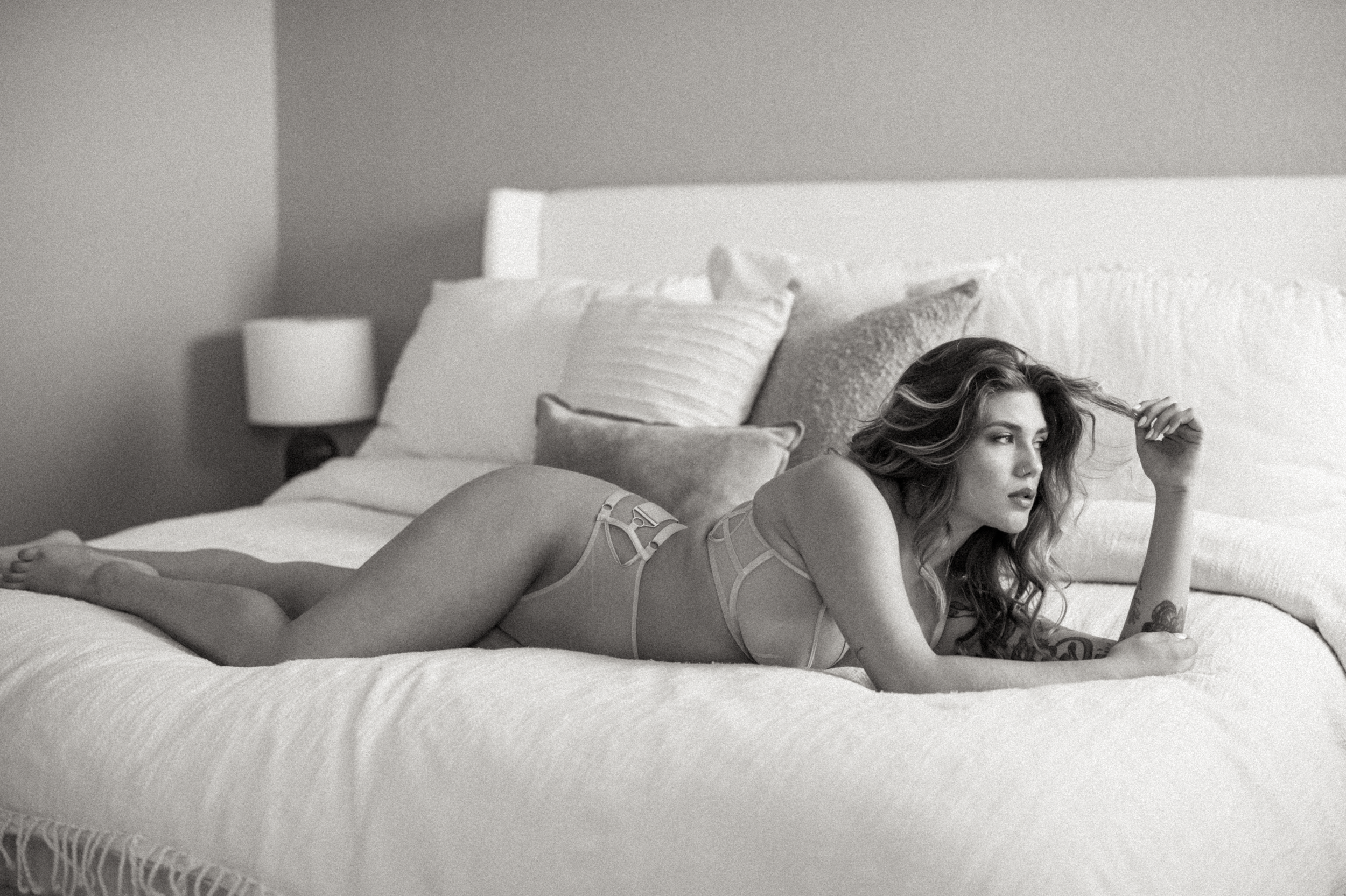
A Greenville boudoir photographer on building a session wardrobe that actually photographs well.
The wardrobe question arrives in nearly every consultation, and it almost always sounds the same. I have no idea what to bring. Or, more honestly: I have some ideas, but I'm not sure if any of them are right.
Both versions are the same problem. The truth is that the best wardrobe for a boudoir session has very little to do with how revealing the pieces are and almost everything to do with how they fit and how the woman feels in them. The single most useful thing to know walking into the planning phase is this: bring what makes you feel like the most magnetic version of yourself, and let the rest follow.
The detailed prep guide that arrives after booking covers wardrobe in full and is shaped to your specific session, but consider this an early frame for what’s to come.
The one rule that matters most
Only bring pieces you love.
Not pieces you bought for the session and feel uncertain about. Not pieces you were told would photograph well by someone who hasn't seen you in them. Not pieces that fit the idea of a boudoir session as you've imagined it. Pieces you put on and feel a little dangerous in. Pieces you've worn in a moment you remember.
Confidence photographs. Doubt does too. The camera is honest about both, and no amount of lighting fixes the difference. A woman in a piece she loves will photograph more powerfully than the same woman in a more "expected" piece she's wearing because she thought she should.
If your partner has pieces they love seeing you in, bring those too. Their eye is part of the story, and a session that incorporates pieces with meaning tends to produce work that lives differently than a session built entirely from new things.
Variety is the second rule
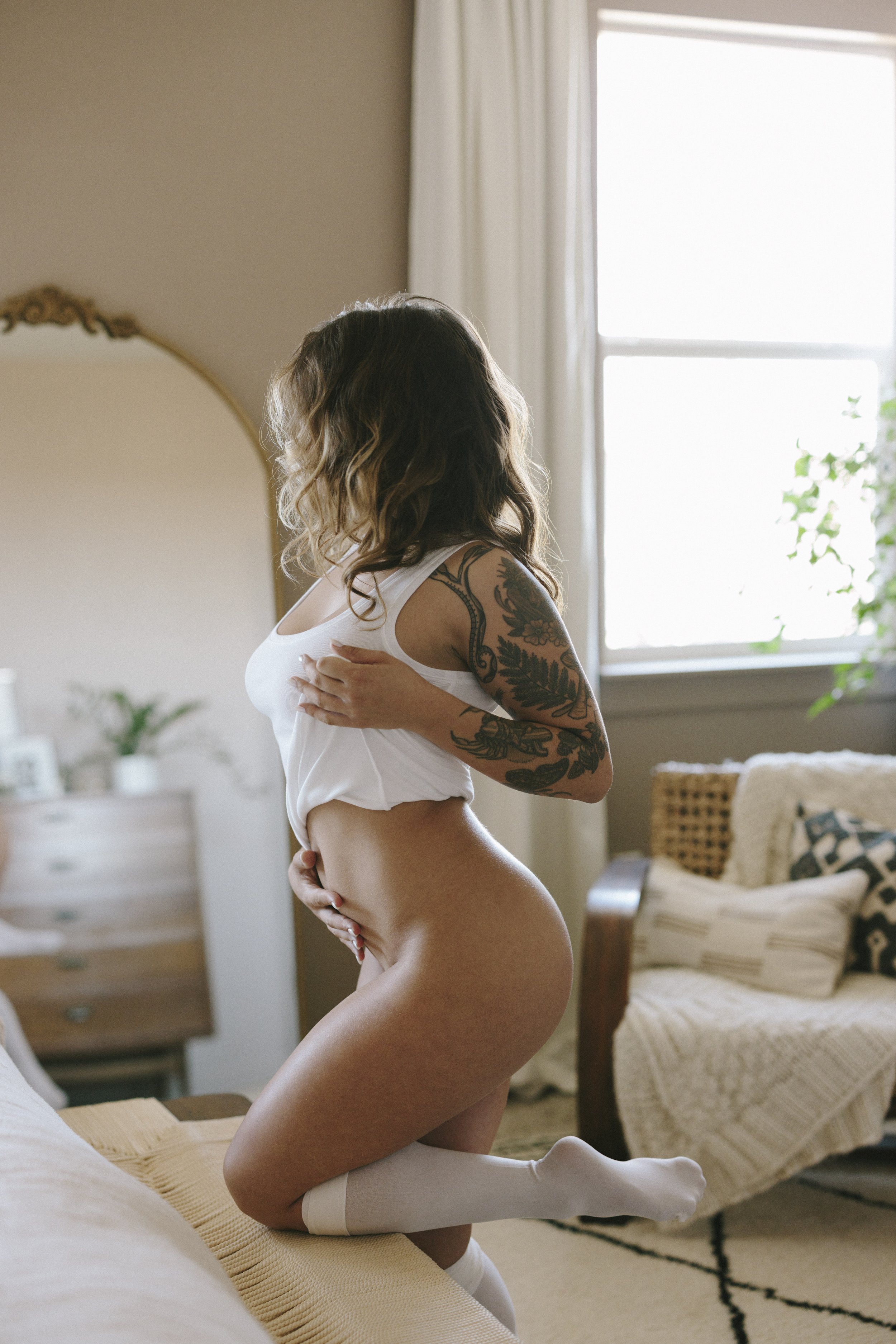
Once the love-it filter is applied, the next question is whether the pieces are different enough from each other to make distinct looks.
This is the most common wardrobe mistake - bringing three different sets of bras and panties in slightly different colors and assuming that's three looks. The reality is… it's one look, photographed three times. The finished gallery, and the album, and the prints all read better when each look is a clear departure from the last.
A useful test: imagine your finished album, and ask whether someone flipping through it would recognize each spread as a meaningfully different scene. If three of the spreads look the same with minor variations, the wardrobe needs more range.
A wardrobe with real variety might include:
A lingerie set, fitted properly
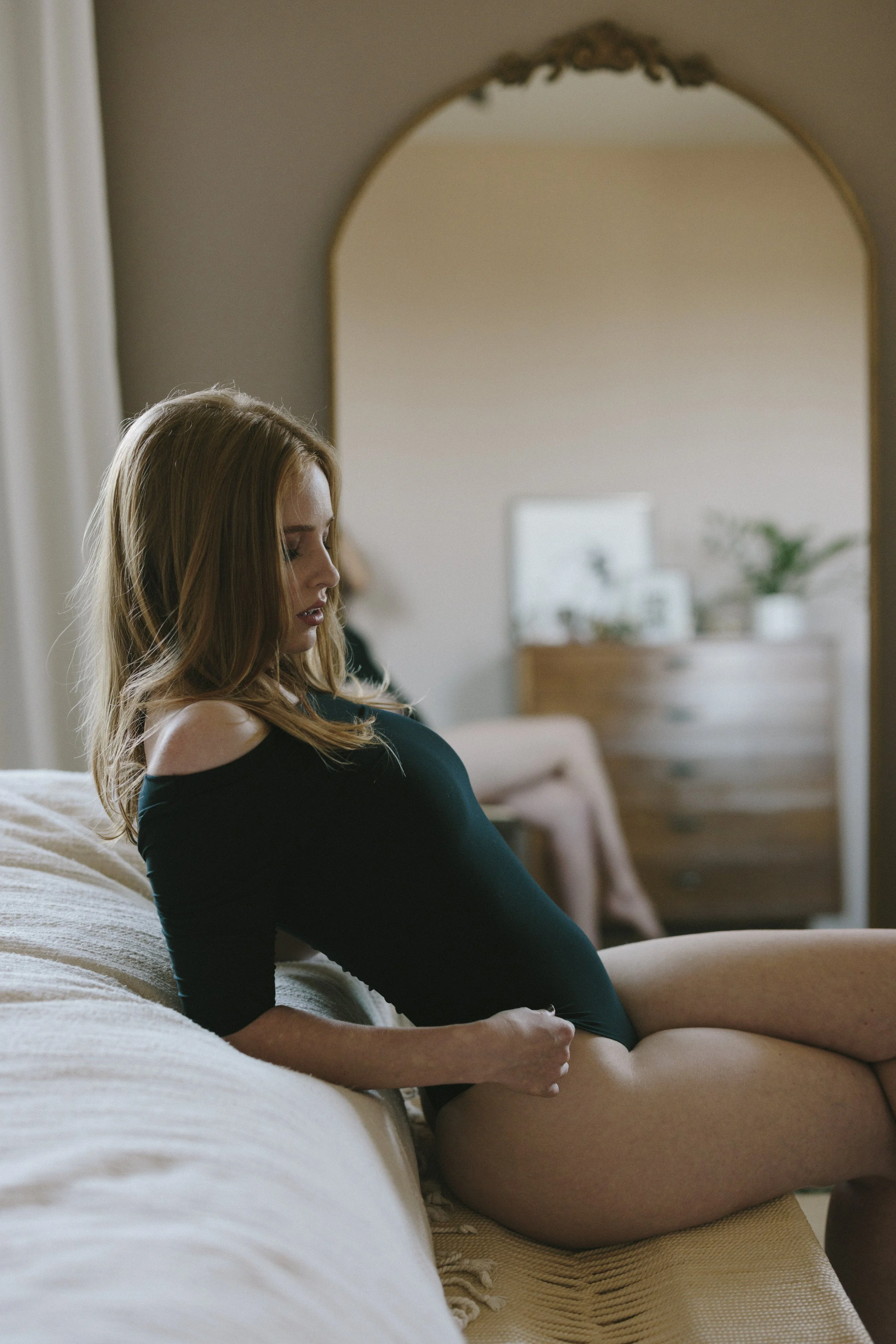
A bodysuit (which photographs differently from lingerie because it's a single line rather than two pieces)
A robe or kimono (great for movement and softness)
A slip or nightgown
A simple piece from your daywear closet - a t-shirt that falls off the shoulder, an oversized button-down from your love, a soft sweater pulled to one side, your favorite tank
A piece of your partner's clothing, if there's something with meaning
The simple piece is worth lingering on. A plain tank, a worn-in sweater, an oxford shirt - these can be among the most striking looks in a finished gallery, precisely because they're not trying. The contrast between something quiet and the way she's wearing it is often more interesting than a more elaborate piece worn in the expected way.
On lingerie, specifically
A few things worth knowing.
Bra fit matters more than most clients expect. A piece that doesn't fit precisely photographs as a piece that doesn't fit. Plan one visit to a fitter before your session - Greenville, Asheville, Charlotte, Charleston, and Atlanta all have boutiques worth recommending depending on where you're coming from, and the prep guide names specific shops by city.
Color is mostly personal, with one exception. Try to avoid neon. Cameras don't render neon faithfully - the color tends to bloom, distort, and pull attention away from the subject. Black, white, pastels, ivory, nude, jewel tones, deep reds, charcoal, and anything in between all photograph beautifully. Whatever you love wearing in real life is almost certainly the right palette for the session.
Have a few different silhouettes ready. A demi-cup, a balconette, a thong-back bodysuit, a pair of boy shorts or cheeky briefs - variety in shape changes the line of every photograph more than variety in color does.
On thigh-highs
If you're wearing them with a garter belt and clips, choose hose without sticky tops. The clips will hold them, and adding sticky tops on top of clips creates a doubled grip that often photographs as visible compression on the leg.
If you're wearing them on their own (the kind that stay up by themselves), size up - go two sizes larger than you'd normally wear. Stay-up tops that fit "correctly" almost always dig into the thigh, which photographs as a visible line of pressure right where you don't want it. Two sizes up gives the right hold without the bite. This is the single most overlooked detail in nearly every wardrobe consultation.
On heels, and bare feet
The higher the heel, the better the line of the leg. Anything over three inches photographs cleanly, with stilettos producing the most dramatic results. Even if you'd never wear them outside the session, they're worth bringing for the way they extend the body.
That said: don't plan on wearing heels with every look. Bare feet are quietly powerful in their own way, and a session with both extremes - heels at their tallest, feet bare for grounding - produces a more interesting range of work than one mode throughout.
Accessories
If you love jewelry, bring it. Stacked rings, layered necklaces, a single statement piece, the bracelet you wear every day. Anything that's part of how you actually dress is part of how you photograph.
The same goes for hair accessories, scarves, sheer kimonos, lace gloves, sunglasses for the right kind of look. None of these need to be in every photograph, but having them available means we can build looks the day reveals as we go, rather than only the looks planned in advance.
On using Pinterest
Spend an evening on Pinterest before your session, and save the images that catch your eye. Don't worry about whether you could recreate them… that's not the point. The point is to find images you love, and then look at why they work.
What is she wearing? How does the piece fit? Is it lingerie or something simpler? Is the focus the wardrobe, or the way she's positioned, or the light? Is the mood quiet or charged?
Bring those references to your planning call. The clearer your sense of what you're drawn to, the more deliberately we can shape your session around it. Pinterest isn't a shopping list. It's a vocabulary.
A note on partner's clothing
Bringing a piece of your partner's wardrobe - a button-down, a sweatshirt, a jersey, a tie - can produce some of the most interesting photographs of the day. Two small things to know:
It almost always needs adjustment. A man's button-down or jersey on a woman generally requires pinning at the back to bring in the shape, otherwise it photographs as too much fabric, bulky, and shapeless. Melissa always has clips on hand for this exact reason.
The pieces with meaning often outperform the ones that are simply "his." A favorite shirt of his that you've worn before tends to photograph differently than something pulled fresh out of a drawer. Whatever has weight in the relationship will have weight in the photograph.
On implied nudes, and the case for sheets
The most striking photographs in many sessions involve the least amount of wardrobe.
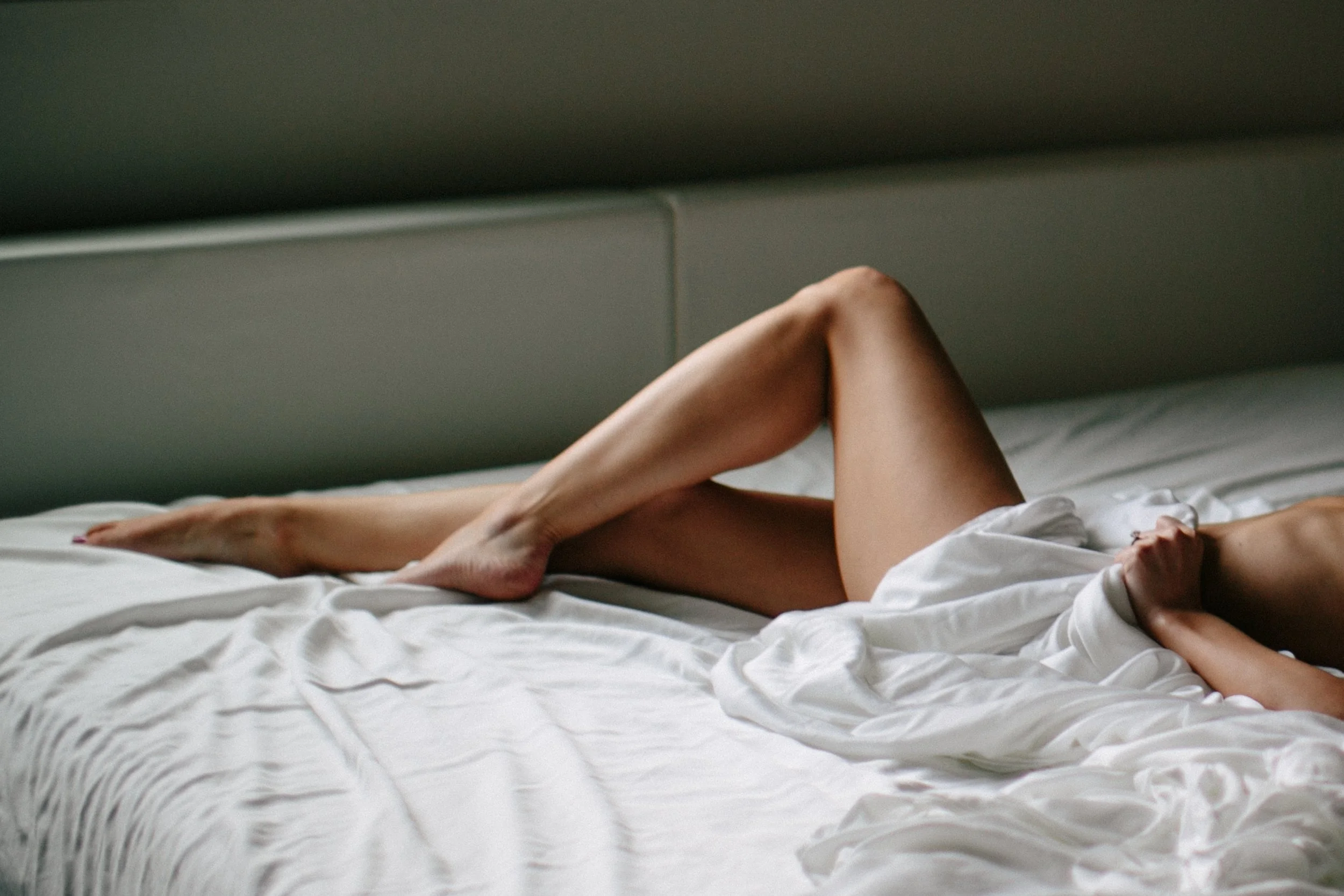
Implied nude work, in its honest form, is exactly that - implied. Nothing is shown that you don't choose to show. The composition, the framing, the way a sheet falls or a robe opens or an arm crosses, does the work that a piece of lingerie would otherwise do. The result is often quieter and more powerful than a more elaborate look, because the focus narrows to her, the line of her body, and the light.
For some clients, this is the part of the session they're most curious about and most uncertain. That uncertainty is normal. Whether implied work is part of your day is a conversation that begins in your consultation, but it isn't a decision you have to make there. Some clients arrive certain. Many find that they're more open to it once the day is underway, the room feels familiar, and the trust between us is established. Whether you decide in advance, on the day, or somewhere mid-session, the choice is always yours, and never under pressure.
A few practical notes if it does become part of the plan:
Freshly cleaned sheets are always provided during your session. The studio has a specific luxe brand kept on hand for exactly this work, chosen for the way the fabric falls. The weight is closer to silk than to cotton, and it moves in a way that hugs the body and holds light beautifully.
Robes, kimonos, and oversized sheer scarves are useful here too. They allow for movement, for openness, for a series of frames that build rather than reveal all at once.
The most important piece of wardrobe during this portion of a session is you. Hair, skin, posture, and breath do more for an implied nude photograph than any prop or piece of fabric. Trust Melissa to handle the rest.
When in doubt
If you're standing in your closet the night before your session and second-guessing every choice, here's the question to come back to: would I wear this and feel like myself, or would I wear this because it's what I think a boudoir session is supposed to look like?
The first one always photographs better.
