
HOW MUCH DOES A LUXURY BOUDOIR SESSION COST?
It's the first question most women have. Yet it's almost never the first question they ask.
There's a small, telling pause that happens during a boudoir consultation when the conversation finally turns to investment. The woman across the call has been thinking about the question for weeks, sometimes longer. She's looked at three or four photographers, scrolled past the ones whose pricing was right there on a tab labeled Investment, and ended up here, where the number isn't published. She's been waiting to ask, slightly apologetic, slightly braced.
Here is the honest answer: the cost of a luxury boudoir session is shaped by what you actually want from it, and that conversation is the consultation. The number isn't withheld for drama. It's withheld because giving it to you in advance, before we've spoken, would mean quoting you a number for something that doesn’t exist yet.
What follows is the longer version of that answer. Useful, hopefully, whether you eventually book at Privée or somewhere else.
The number you'll find on most photographers' websites
A quick scan of boudoir studios in any major Southern market - Greenville, Charlotte, Atlanta, Charleston, Asheville - turns up a familiar pattern. “Sessions starting at $400.” “Packages from $850.” “Mini-sessions $250.” The numbers are real, and for the kind of work being offered, they're appropriate.
What that number usually buys is a session: an hour or two of shooting, a digital gallery, sometimes a small print credit. It's a transaction. The photographer needs the booking, the client needs the photos, and the price reflects what's being moved between them. Nothing wrong with that model. It's just a different one.
When you're researching luxury boudoir photographers - the studios that work editorially, treat the genre as fine art, and produce finished work in the form of albums and gallery prints rather than digital files alone - the pricing model shifts. You're no longer paying for a session. You're paying for the entire arc: the consultation, the planning, the day, the reveal, and the work that comes out of it.
That's why the number lives in a different place.
What actually shapes the investment
Three things, mostly. They aren't secret. They're just rarely listed on a public page because each one varies by client.
The session itself. Most luxury boudoir sessions run two to three hours, with three or four wardrobe changes, and they're held in a studio set up specifically for the work… controlled light, multiple rooms, full privacy. At Privée, the upper collections include hair and makeup styling on the day; the lower ones don't. That single line item shifts the experience and the price.
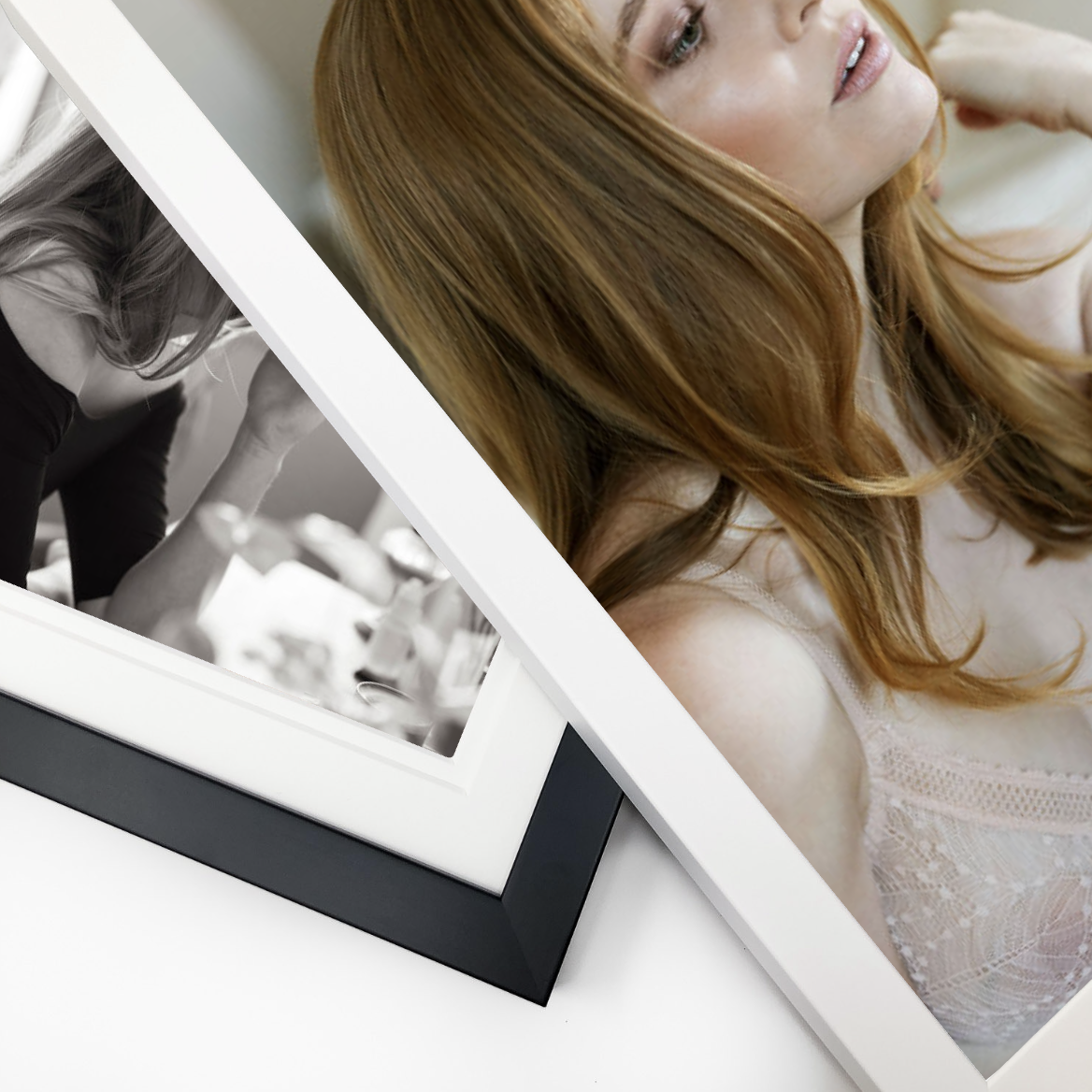
The finished work. Files alone aren't the product, and most luxury studios don't sell them as the primary deliverable. Albums, hand-bound in linen or leather. Fine art prints made on archival cotton paper. Framed work, canvas wraps, metal panels. Keepsake boxes for albums and prints. None of these are made by clicking a button. They're made by hand, finished by hand, and packed personally before they leave the studio. Quality at this level isn't an upgrade; it's the job.
The decision of when to choose. Some clients want everything chosen at booking - the full collection bundled, the album decided in advance, the experience handled end-to-end. Others want to see their photos first and choose from there. Both paths exist at Privée. The investment is shaped by which one fits how you want to work.
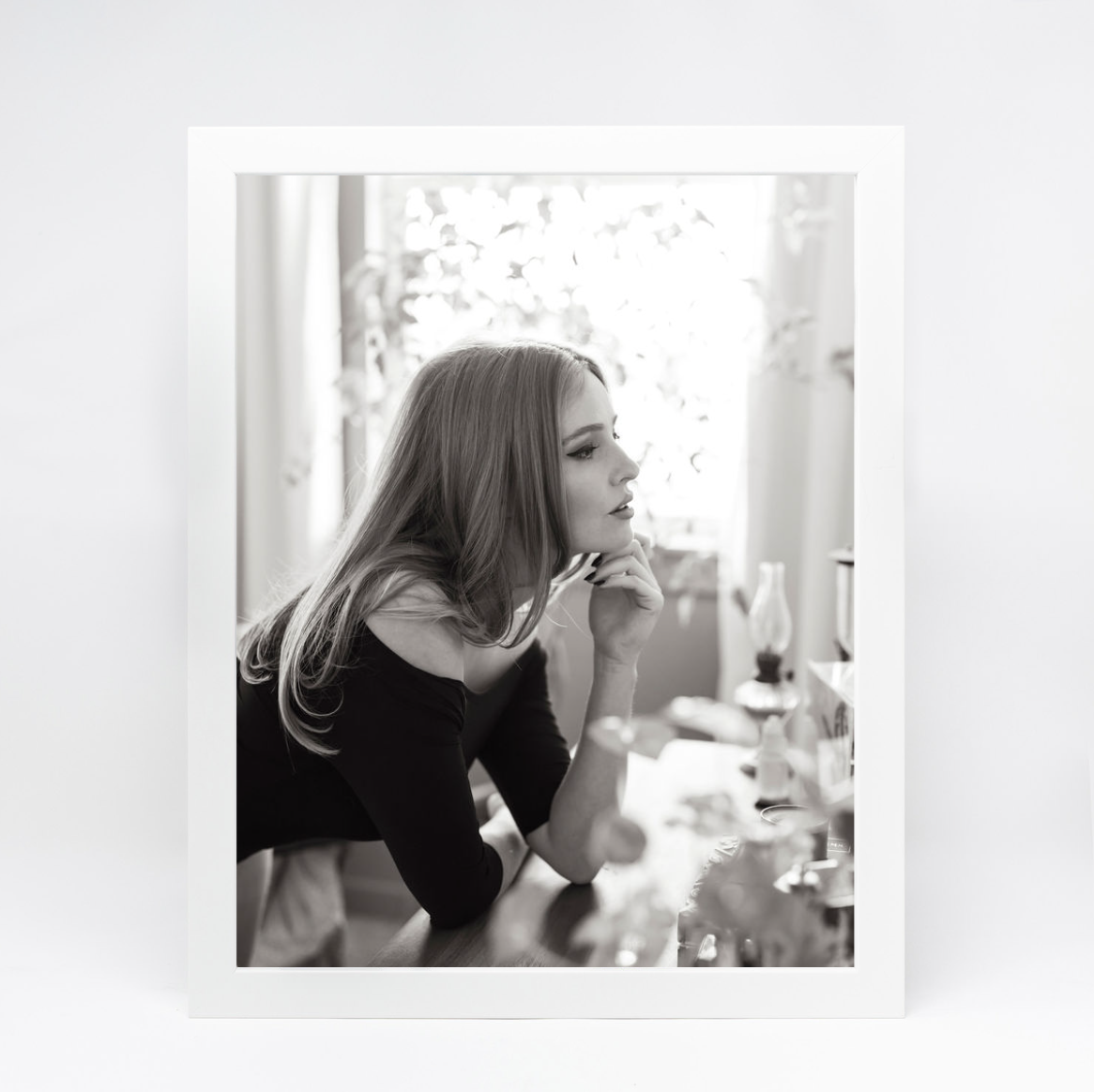
The simplest way to understand the range: most clients investing in a complete session and finished work at Privée are landing in the territory of a custom piece of art. Which, by the time the work is in your hands, is effectively what you've made.
Why the price isn't on the page
A few reasons, all related.
Because the conversation matters. When a number is the first thing a prospective client sees, it becomes the lens for everything else. The portfolio is suddenly evaluated against the price tag. The studio is sized up. The work is filed under "expensive" or "affordable" before any of the actual content has been considered. The consultation is what allows that order to be reversed - to begin with what you want from the experience, and let the investment follow from there.
Because no two clients build the same collection. A bride preparing a wedding gift is making different choices than a woman marking a fortieth birthday. A client who knows she wants a thirty-image album from the start has a different path than the one who'd rather see the gallery first and decide. A standard published number doesn't fit any of them; it's only the shape of an average.
Because the woman who reads "from $4,500" online and quietly closes the tab might have been the right client at a different number. Pricing is often a self-selection mechanism, and it works in both directions. Some clients filter themselves out at the wrong tier; others over-extend at the right one. Neither serves the work. The consultation is meant to handle that calibration carefully, not in the first three seconds of a website visit.
What "luxury boudoir" actually means
A useful question, because the term gets used loosely. At its honest definition, luxury boudoir means three things, all of which scale the investment.
The work is editorial in approach. Lighting is shaped, not snapped. Wardrobe is considered weeks in advance. Direction is intentional. The session is photographed by someone who treats the genre as portraiture rather than as a photo session.
The output is made, not delivered. Albums are bound. Prints are paper-stock decisions, not just file exports. Files alone are rarely the product, because files alone aren't the work.
The experience is personal. One client at a time. No assembly-line bookings. The consultation, the planning, the session, and the reveal all happen with the same photographer who is invested in the outcome at every stage.
If a studio is offering all three, the investment reflects all three. If it isn't, the investment reflects what is actually being made.
What to do with the number you don't yet have
If you've gotten this far, you have a clearer sense of what shapes the cost than most prospective clients do walking into a consultation. Use it.
Decide what kind of work you want. A bound album to live with. A single framed print on a wall. A keepsake for a wedding day. The finished form is the most useful thing to know before the conversation starts.
Consider the timeline. Six weeks from session day to finished work in hand is the floor for any serious luxury studio. Plan accordingly.
Inquire when you're ready. The consultation is unhurried, by appointment, and there's no expectation that you'll book at the end of it. The conversation is meant to give you the information you need to decide - and to give the photographer the information they need to shape the right collection for you.
The number isn't the answer to your question. The work is. Once you've seen what the work could be, the number is just the cost of making it.
