
HOW TO CHOOSE A BOUDOIR PHOTOGRAPHER
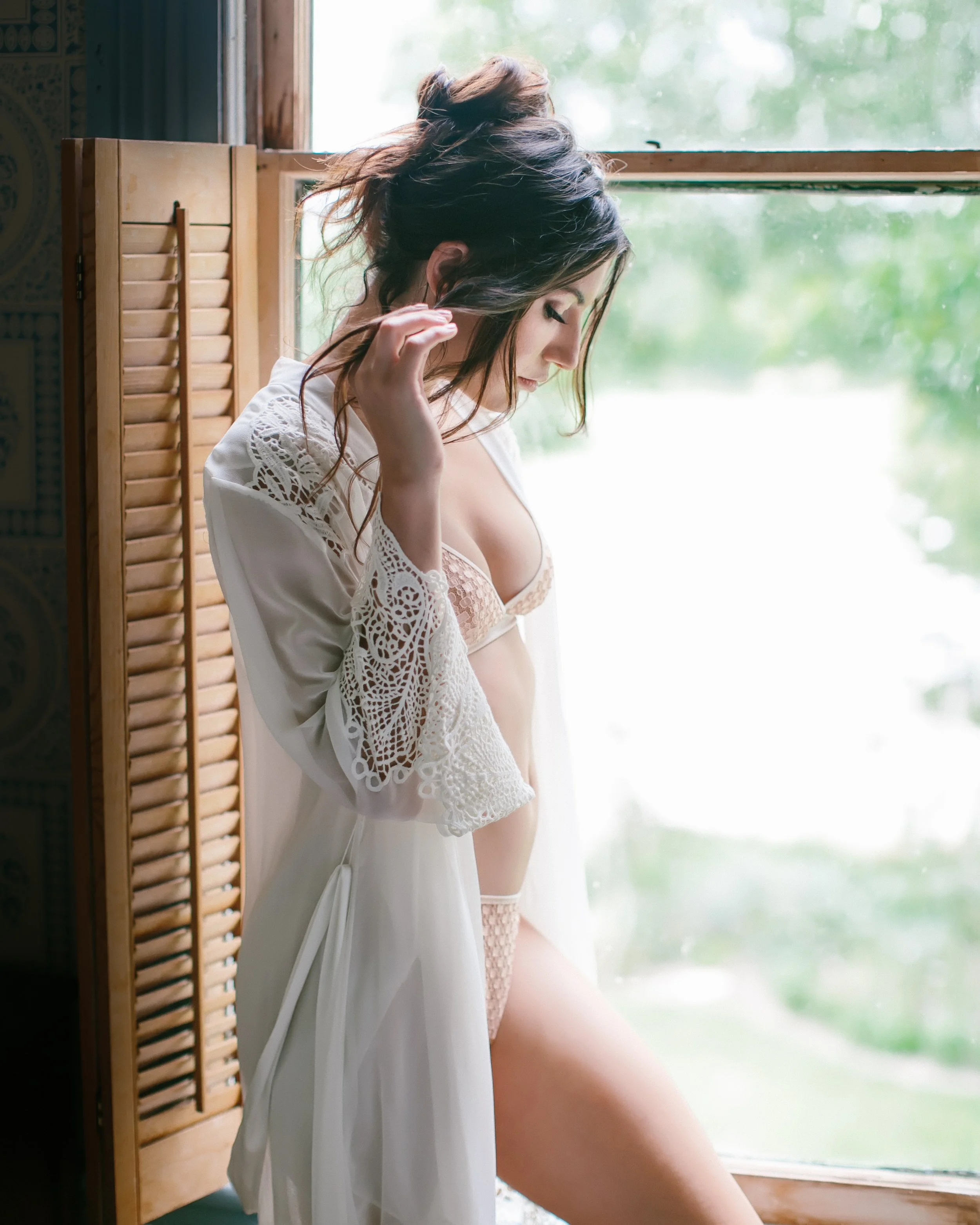
Most advice on this question reads like a buying guide. Compare portfolios, read the reviews, check the price, book the one that fits the budget. That framing works for a service. It doesn't work here, because you aren't hiring a service. You're choosing the one person who will be in the room with you, directing you, deciding how you are seen.
That changes what matters. The right photographer isn't the one with the lowest session fee or the longest list of credentials. She's the one whose work you recognize yourself in, whose presence settles you, and whose judgment you trust before you've undressed in front of a camera. Here is how to find her.
Start with the work, and notice how it makes you feel
Open a photographer's portfolio and watch your own reaction before you analyze anything.
Do you see yourself in the images, or someone the camera is performing for? Do you want to look like the women on the screen — or do you cringe a little at the poses, the props, the level of skin? Does it feel like recognition, or does it feel like exposure?
This is the most reliable test you have, and it asks for no expertise. The discomfort you feel looking at a gallery is the discomfort you'd feel in the photographs. The ease works the same way. Notice where you relax and lean in, and notice where something in you pulls back. Trust the pull-back.
Most boudoir is made for someone other than the woman in the frame. When the work is made for her, you can feel it — the images look like a woman seen, not a woman displayed. If a portfolio leaves you uneasy, that's information. You won't love photographs that come from a vision you didn't love first.
Talk to her before you book
A boudoir session is among the most intimate things you'll do with a near-stranger. You shouldn't book one from a contact form.
Any photographer worth choosing will offer a conversation first — phone, video, or in person. If a studio takes a deposit without ever speaking to you, treat that as a reason to pause. The call isn't a formality. It's where you find out whether the energy is right, whether she answers your questions plainly, and whether you feel steadier at the end of it than you did at the start.
That's exactly what the consultation is for in my own practice. Before anything is booked, we talk — your choice of phone, video, or in person — and its only purpose is for you to feel at ease with the process and with me. No question is too small or too silly. By the time we finish, you'll know how the day works and feel prepared for it. Every point of contact after that exists to hold the same ground: the prep guide before the session, a planning call if you want one, and the day itself, where I coach you through every part of it so you're never lost or guessing.
Pay attention to what the studio asks of you
One detail tells you more than a polished website will: wardrobe.
Be cautious of studios that supply the clothing. No studio can stock garments that fit every woman properly, and the experience suffers for it — pieces that pinch or gape, fabric that photographs cheaply, and the hygiene question no one wants to raise about shared intimate wear. Wardrobe should be yours, chosen for your body and guided by someone who knows what reads well on camera. The work looks like you when the clothing was meant for you.
Cost is real. It is not the deciding vote.
These sessions are an investment, and pretending otherwise wouldn't serve you. But cost is the wrong place to make the final call.
This isn't the thing to save money on. It's a splurge in the truest sense — a deliberate choice to spend on something that is only for you. Decide on price alone and you risk the one outcome you can't redo cheaply: photographs you don't love, made by someone who wasn't the right fit. It's often worth spending a little more to know the work and the experience will be what you came for. Find the photographer whose images you recognize yourself in, whose presence you trust, whose eye you already love — then let the cost follow that decision rather than lead it. This is a thing you want to get right the first time.
Experience you can feel
Years aren't a requirement. A photographer early in her work can have a fine eye. But experience earns its keep here in a particular way.
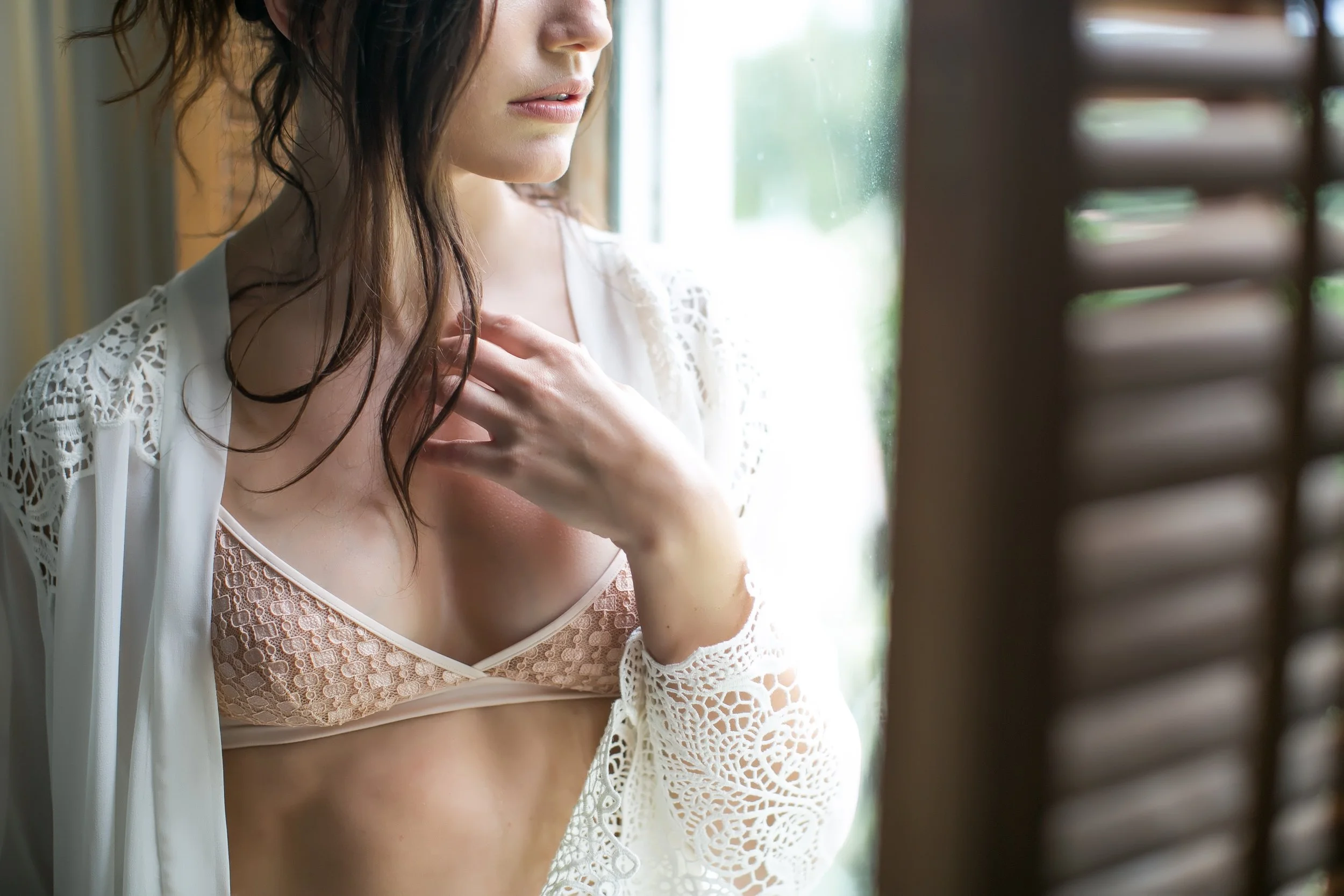
Most women come to a session having never modeled, unsure what to do with their hands, certain they'll feel awkward. What settles that isn't instruction — it's being led by someone who has done this long enough that nothing surprises her. The calm of a photographer who has guided hundreds of women through the same nerves becomes your calm. You stop managing the situation and let yourself be directed. Quiet confidence on her side of the camera is what lets you forget the camera is there.
The simplest test
After everything — the portfolio, the call, the craft — the question is plainer than it sounds. Do you like her?
Not "is she qualified." Do you feel, talking to her, like you're talking to a friend who gets you. Someone you'd actually want to spend a few hours with. The best sessions happen when that's true, because you stop performing and start enjoying yourself, and that ease is the thing the camera sees. Choose the photographer you'd want in the room even if she weren't holding a camera. That's usually the one.
